The Short Answer
Most children are ready to start piano lessons between ages five and nine. Children younger than five can benefit from activities like rhythm games and singing, while kids who start at seven, eight, or even tenoften progress quickly because of their stronger focus and coordination. The best age depends less on a number and more on your child’s individual readiness.
The age range most piano teachers agree on
Ask ten experienced piano teachers when a child should start lessons, and you’ll hear the same answer from nearly all of them: somewhere between five and nine years old. That range holds up across teaching methods, countries, and decades of studio experience.
Why five? By age five, most children can identify the letters of the alphabet, count to at least ten, and sit with focused attention for 20 to 30 minutes. Their hands have grown large enough to rest five fingers across five white keys. These aren’t arbitrary benchmarks — they’re the building blocks that make a first piano lesson productive rather than frustrating.
Why nine? Because the brain’s capacity for absorbing musical patterns remains remarkably strong through the early elementary years. A 2009 study led by researchers at Harvard Medical School found that children who began instrumental training at age six showed measurable changes in brain structure — including increased volume in motor areas and the auditory cortex — after just 15 months of lessons. Other research suggests the corpus callosum, the bridge connecting the brain’s two hemispheres, grows more rapidly in young musicians, especially when training begins before age seven.
That said, “between five and nine” is a guide, not a rule. Some four year olds thrive in lessons. Some ten year olds are just discovering their interest. Jacob Reed, co-founder of Lively Keys, puts it simply: “Readiness matters more than the calendar.”
What your child looks like at every age
Every child develops differently, so a birthday alone won’t tell you whether lessons will stick. Here’s what to realistically expect at each stage.
Ages three and four: building the foundation
Most three and four year olds aren’t ready for traditional piano lessons. Their fingers lack the independence to play individual notes, and sitting still for 30 minutes is a tall order. But that doesn’t mean music should wait. Early activities — clapping rhythms, singing familiar songs, exploring high and low sounds on a keyboard — build ear training and musical awareness that will make formal lessons easier later. The Suzuki method, which teaches by ear before introducing written notation, sometimes begins as early as age three, though it requires heavy parent involvement at every session.
Ages five and six: the sweet spot for most beginners
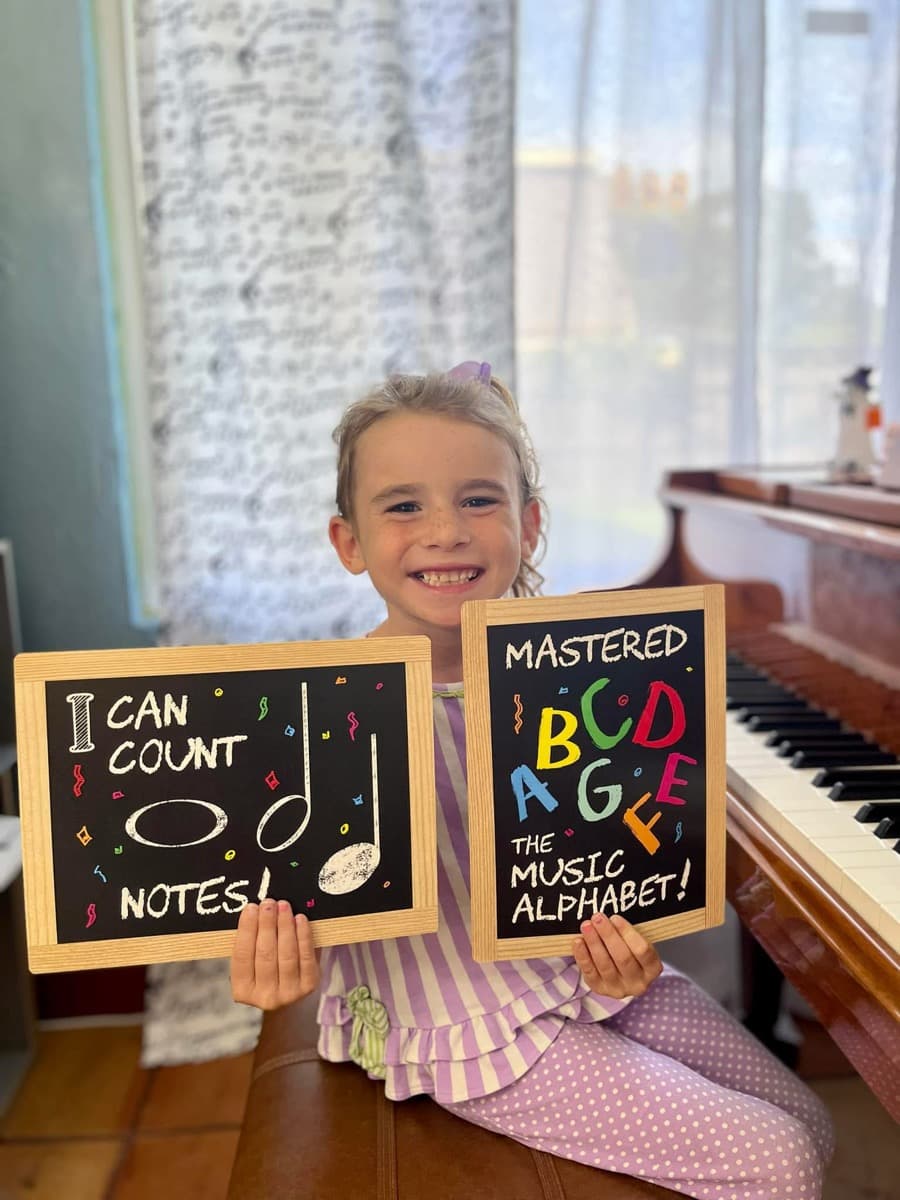
This is where the best age to start piano lessons lands for the majority of children. A five or six year old typically has the hand size, attention span, and letter recognition needed for a real first lesson. They can follow instructions with two or three steps and begin connecting written notes on a page to sounds on the instrument. Lessons at this age often incorporate games, colorful method books, and short pieces that keep momentum high. Curious about what piano lessons cost in the Sarasota area?
Ages seven through nine: strong focus, fast progress
Children in this range bring something younger students don’t: the ability to practice independently. A seven year old can read directions in a method book, remember what their teacher assigned, and manage basic practice sessions without constant supervision. Many teachers find that students who start at seven or eight catch up to peers who began at five within a year or two, thanks to stronger cognitive skills and longer attention spans.
Ages ten through twelve: absolutely not too late
If your child is ten, eleven, or twelve and asking about piano, the answer is a clear yes. Older beginners benefit from longer attention spans, faster reading comprehension, and the ability to understand music theory concepts like scales and key signatures from day one. Some of the most dedicated students start in this window because the decision comes from genuine personal interest rather than a parent’s suggestion.
Seven signs your child is ready right now
Rather than fixating on what age piano lessons should begin, look for these readiness signals:
- 1They can place five fingers on five adjacent white keys without straining or bunching their hand.
- 2They recognize the letters A through G, since note names use that part of the alphabet.
- 3They can count to at least four steadily, which forms the basis for keeping rhythm.
- 4They can sit and focus on one activity for 20 to 30 minutes — reading, drawing, or building something counts.
- 5They show genuine interest, whether that means asking questions about piano, pressing keys whenever they see one, or humming melodies throughout the day.
- 6They can follow instructions with two or three steps from an adult other than a parent.
- 7They demonstrate basic left and right hand awareness, even if they still occasionally mix them up.
If your child checks four or five of these boxes, they’re likely ready. If they check two or three, a few months of musical games at home or a group music class can close the gap quickly.
What the research actually says about early music training
The case for starting piano young goes beyond tradition — it’s grounded in neuroscience. A landmark 2004 study by psychologist E. Glenn Schellenberg gave 144 six year olds either piano lessons, voice lessons, drama lessons, or no lessons at all for 36 weeks. The children who received music instruction showed small but consistent IQ gains across every measured category, including verbal comprehension and processing speed.
More recent research adds to the picture. A systematic review published in Frontiers in Psychology analyzed 46 studies and found consistent beneficial effects of music training on children’s motor skills, language development, social abilities, and academic performance. Another review of 26 studies confirmed that music participation strengthened emotional intelligence and prosocial behavior in children between three and twelve.
The physical changes are striking too. After just five months of piano practice, the corpus callosum shows increased growth compared to peers who don’t play. That effect is strongest when practice begins before age seven, according to neuroimaging research. A separate study from McGill University found that children who took music lessons scored higher on tests of spatial cognitive development — abilities that form the basis for math and engineering performance later.
None of this means a child who starts at nine misses out. The brain remains remarkably plastic throughout childhood and adolescence. But it does suggest that piano lessons during the early elementary years deliver compounding cognitive benefits that extend well beyond music.
Suzuki, traditional, or something else entirely
The teaching method matters almost as much as the starting age. Here are the approaches parents encounter most often.
The Suzuki method was developed by Japanese violinist Shinichi Suzuki and treats music learning like language acquisition. Children learn to play by ear first, memorizing short pieces through listening and repetition before ever reading a note on the page. Suzuki piano can begin as early as age three or four, but it requires a parent to attend every lesson and guide daily practice at home. It works beautifully for families willing to make that level of commitment.
Traditional method book approaches — such as Faber Piano Adventures, Piano Safari, or Alfred’s Basic Piano Library — introduce note reading from the start. Lessons follow a structured sequence of skills, and students typically begin around age five or six when their reading readiness supports the material. Most private teachers and academy studios use some variation of this approach.
There’s no single “best” method. The right choice depends on your child’s age, your family’s schedule, and your teacher’s strengths. At Lively Keys, Courtney Reed tailors the approach to each student rather than committing to one rigid method for everyone — which is a good sign in any teacher you evaluate. Read our guide to choosing the right piano teacher for your child.
Frequently Asked Questions
Is four too young for piano lessons?
For most children, yes — traditional lessons at four can lead to frustration because fine motor skills and attention spans are still developing. Early musical activities like rhythm games, singing, and keyboard exploration give four year olds a strong foundation without the pressure of formal instruction.
Is seven too old to start piano?
Not at all. Seven is one of the best ages to start piano lessons. Children at seven read well, focus for longer stretches, and can practice more independently. Many students who begin at seven progress just as quickly as those who started at five.
How long should a five year old practice piano?
Ten to fifteen minutes a day is plenty. Short, consistent practice sessions build habits without causing burnout. As focus and stamina grow, practice time can gradually increase.
Should my child start with a real piano or a keyboard?
A weighted keyboard with at least 61 keys works well for beginners. The weighted action mimics an acoustic piano and helps develop proper finger strength. A full acoustic piano is wonderful if you have one, but it isn’t required to get started.
Are group piano lessons or private lessons better for kids?
Both have value. Group lessons build social skills and make learning fun, while private lessons allow a teacher to customize instruction to your child’s pace and interests. Many families start with group classes and move to private lessons once a child shows sustained interest.
Can my child start piano if they can’t read yet?
Yes. Methods like Suzuki teach music through patterns and ear training, making them accessible to children who haven’t started reading. Letter recognition (A through G) helps but isn’t strictly required.
The best time to start is when your child is ready
The best age to start piano lessons isn’t a single number — it’s the moment when your child’s curiosity, focus, and physical development align. For most families, that moment arrives somewhere between five and nine. But whether your child is four and eager or eleven and just discovering their love for music, the right teacher can meet them exactly where they are.
If you’re wondering whether your child is ready, we’d love to help you find out. Book a trial lesson at Lively Keys Piano Academy in Lakewood Ranch and see how your child responds to real, hands on music making — no commitment required.